Tag docker

Hack The Box: DoubleTake Machine Walkthrough – Easy Difficulity
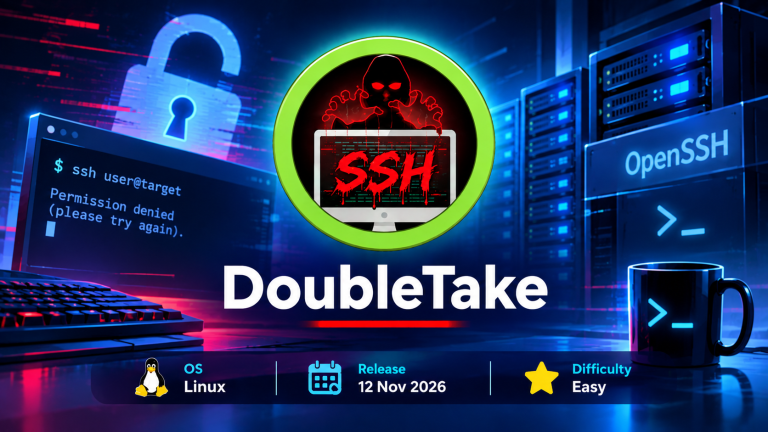
Another Hack The Box Doubletake machine completed!

This machine provided an interesting look at two vulnerabilities and how they can be chained to achieve full system compromise.

The initial foothold involved CVE-2026-123158 (SSHole), an OpenSSH authentication vulnerability that allowed access to an Alpine Linux container. Further investigation uncovered stored Firefox credentials, which provided SSH access as `bob`.

For privilege escalation, I explored CVE-2026-41567, a Docker Engine vulnerability involving malicious decompression executables. By abusing the archive deployment functionality, I achieved a container escape and obtained root access on the host.

Key Takeaways:
- OpenSSH authentication vulnerabilities
- Linux container enumeration
- Firefox credential extraction
- Docker archive extraction abuse
- Container escape and privilege escalation

Another great opportunity to practise Linux enumeration, vulnerability research, and container security.

#HackTheBox #HTB #DoubleTake #CyberSecurity #PenetrationTesting #Linux #Docker #OpenSSH #CVE-2026-123158 #CVE-2026-41567 #PrivilegeEscalation #RedTeam
Hack The Box: Kobold Machine Walkthrough – Easy Difficulty

Completed the Hack The Box "Kobold" machine, an easy-difficulty Linux challenge focused on web exploitation and container-based privilege escalation.

The assessment involved identifying and exploiting an unauthenticated Remote Code Execution vulnerability (CVE-2026-23744) in MCPJam Inspector to gain initial access as the ben user. During the privilege escalation phase, I explored Docker security weaknesses by leveraging excessive group permissions to escape the container environment and obtain root access. Additionally, I analyzed an alternative attack path involving CVE-2025-64714 in PrivateBin, which allowed sensitive configuration data exposure and access to the Arcane container management interface. This machine provided practical experience in vulnerability exploitation, container security assessment, and identifying risks associated with exposed internal services.

#HackTheBox #HTB #CyberSecurity #PenetrationTesting #OffensiveSecurity #RedTeam #Linux #Docker #VulnerabilityManagement #CVE #EthicalHacking #CybersecurityLearning

Hack The Box: Fries Machine Walkthrough – Hard Difficulty

Just wrapped up another Hack The Box machine: Fries (Hard).

TThis machine provided a realistic attack path that started with source code review in Gitea, where leaked credentials in a Git commit led to authenticated PostgreSQL RCE through pgAdmin. From there, I pivoted through the internal Docker network using Ligolo-ng, abused an exposed NFS share and debugfs to gain host access, then exploited PWM configuration weaknesses to capture LDAP credentials. The final stage involved Active Directory enumeration and AD CS (ESC6/ESC7) abuse to obtain an administrator certificate and compromise the domain. A great lab for practising web exploitation, Docker security, Linux privilege escalation, internal pivoting, and Active Directory attacks.

#HackTheBox #HTB #CyberSecurity #PenetrationTesting #RedTeam #ActiveDirectory #ADCS #Docker #Ligolo #PostgreSQL #Gitea #EthicalHacking #Writeup #CTF

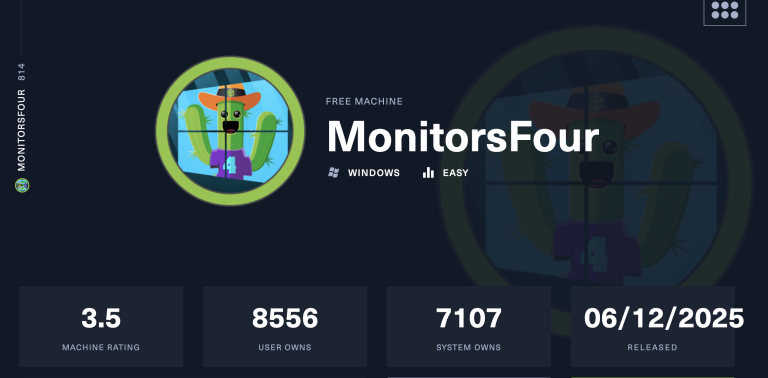
Hack The Box: MonitorsFour Machine Walkthrough – Easy Diffucilty

Wrapped up another solid box with a clean chain from web exploitation to full host compromise.

Gained initial access through an IDOR vulnerability on the /user endpoint, which exposed an admin hash that cracked to wonderful1. This provided access to the Cacti dashboard as marcus. From there, exploiting CVE-2025-24367 led to a reverse shell inside a Docker container as www-data, where the user flag was retrieved.

Privilege escalation came from spotting an exposed Docker API. By deploying a privileged container and mounting the host filesystem, it was possible to break out of the container and access the Windows host, ultimately retrieving the root flag.

Nice reminder of how small web flaws can cascade into full infrastructure compromise when combined with misconfigurations like exposed Docker daemons.

#cybersecurity #penetrationtesting #redteam #docker #privilegeescalation #websecurity #ethicalhacking #infosec

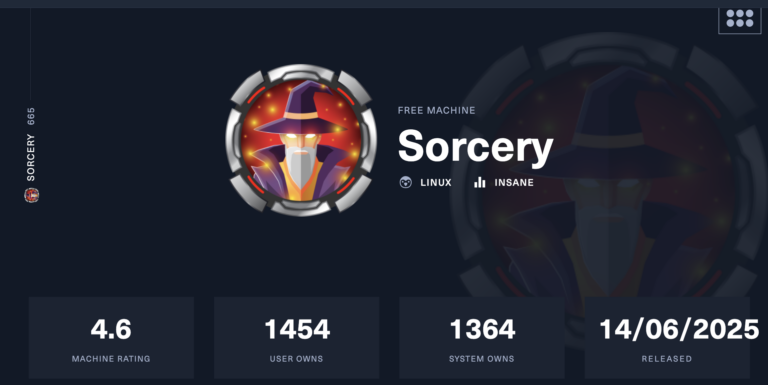
Hack The Box: Sorcery Machine Walkthrough – Insane Difficulty

Recently, I completed the “Sorcery” machine on Hack The Box (Insane difficulty), which provided a deep, multi-layered challenge combining modern web exploitation, internal pivoting, and complex privilege escalation.

The attack began with reconnaissance of a self-hosted Gitea instance, where exposed source code revealed the application architecture. This led to identifying a Cypher injection vulnerability in functionality backed by Neo4j, which enabled SSRF to leak sensitive data such as password hashes and a registration key. After gaining seller access, a stored XSS payload was used to hijack an admin session and access a restricted debug feature. This interface allowed interaction with internal services, ultimately achieving remote code execution via a Kafka-based payload. From there, pivoting with Ligolo-ng exposed internal services, including an FTP server containing an encrypted private key, which was cracked offline to gain SSH access and retrieve the user flag.

Privilege escalation required chaining multiple subtle misconfigurations. A running Xvfb instance exposed a screen dump containing credentials for a higher-privileged user. With limited sudo access, strace was used to capture plaintext credentials from running processes. Further enumeration revealed activity tied to FreeIPA, where identity management controls were abused to gain full sudo privileges. After applying the changes, this ultimately led to root access and full system compromise.

#HackTheBox #CyberSecurity #PenetrationTesting #RedTeam #EthicalHacking #CTF #Infosec #PrivilegeEscalation #WebSecurity

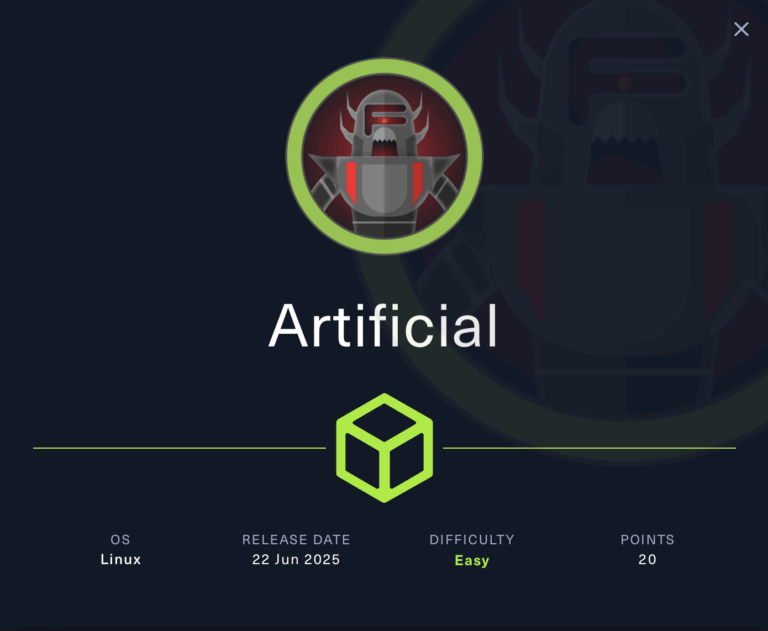
Hack The Box: Artificial Machine Walkthrough – Easy Diffucilty

Hacking the "Artificial" Machine on Hack The Box!

Conquered the "Artificial" machine on Hack The Box! 🕵️‍♂️ I scanned the target, identified a web server on port 80, and created an account to access its dashboard, where I uploaded a malicious .h5 file to trigger a reverse shell. Using a Docker environment, I gained a shell as the app user, found a SQLite database (users.db), and cracked its password hashes to reveal credentials for user "gael," allowing me to grab the user flag via SSH from user.txt. For root, I discovered port 9898 running Backrest, forwarded it, and enumerated backup files, finding a bcrypt-hashed password in config.json. Decoding a base64 value yielded a plaintext password, granting access to the Backrest dashboard, where I exploited the RESTIC_PASSWORD_COMMAND to trigger a root shell and secure the root flag from root.txt.

#Cybersecurity #HackTheBox #CTF #PenetrationTesting #PrivilegeEscalation

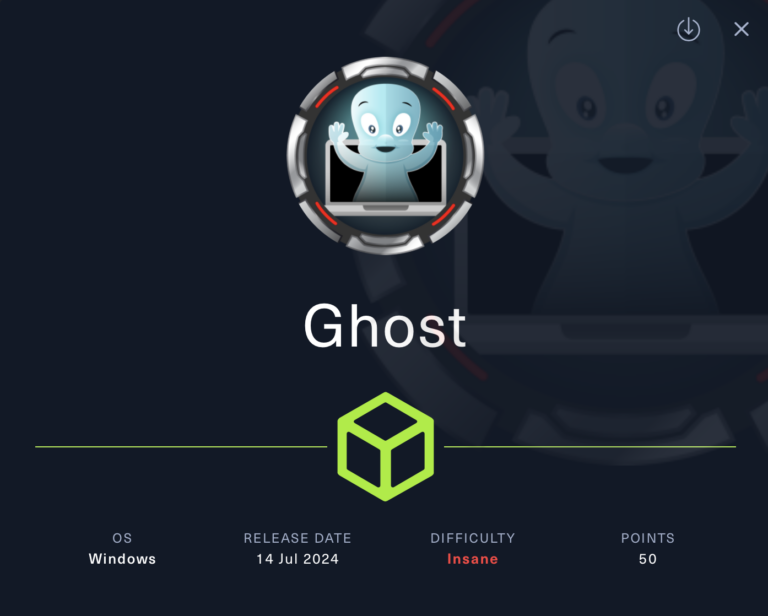
Hack The Box: Ghost Machine Walkthrough – Insane Difficulty

The initial foothold was gained by exploiting command injection on intranet.ghost.htb:8008/api-dev/scan/, which provided a reverse shell inside a Docker container. From there, I enumerated the environment and discovered credentials that allowed SSH access as Florence Ramirez. By extracting and converting a Kerberos ticket, I authenticated as a legitimate user, escalating access within the system. With access to the Windows environment, I retrieved NTLM hashes for the adfs_gmsa account and leveraged evil-winrm for lateral movement. A reverse shell was established using JokerShell, and privileges were escalated by enabling xp_cmdshell through a debug interface. After uploading EfsPotato.cs and disabling antivirus, I used Mimikatz and Rubeus.exe to dump credentials, ultimately achieving SYSTEM access. This led to the extraction of domain admin credentials and the retrieval of the root flag. Another Insane box down! 💀💻

#HackTheBox #RedTeam #CyberSecurity #PenTesting #PrivilegeEscalation #EthicalHacking